Why Fuchsia might be the operating system the AI era needs
Background
Most operating system debates start from Linux. Fuchsia does not. Google built it from scratch on Zircon, a microkernel-style kernel. That freed the design to start from today's requirements.
That question matters more now than when the project began. The AI era is changing what we ask of a device, and the assumptions baked into Android and iOS were set long before agents, on-device models, and continuous software delivery were normal.
A different architecture
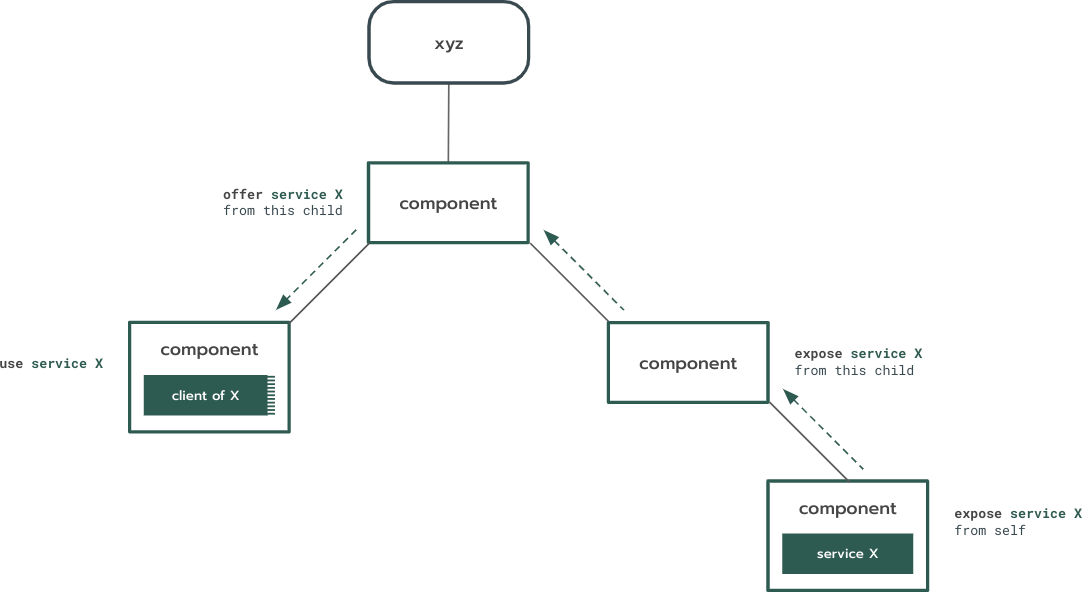
Start with structure. In Fuchsia almost everything above the kernel is a component: a sandboxed unit of software that talks to the rest of the system through FIDL, a typed interface language. There is no ambient authority. A component can only do what it has been explicitly granted through a capability.
Capability-based security replaces the coarse permission model phones use today. A typical phone grants broad access once at install. Fuchsia names and routes every capability individually.
Updates similar to Websites
Fuchsia software is delivered as content-addressed packages that are resolved on demand, the way a browser fetches resources. Drivers run in user space through the Fuchsia Driver Framework, decoupled from the kernel.
The practical result is web-like patching. Parts of the system can be updated independently, without the full-OS release cycle that leaves Android devices fragmented for years. Fuchsia has already shipped this way: since 2021 it has run on the first-generation Google Nest Hub, delivered as a silent over-the-air update that replaced the previous OS without users noticing.
Fast, granular updates are a requirement in the AI era. Models, safety policies, and agent behavior now change on a monthly cadence. An operating system that patches like the web keeps pace with software changing that fast. Yearly OS images fall a full cycle behind every model release.
Designed for AI from the start
The capability model is where Fuchsia becomes genuinely AI-native. An AI agent acting on your behalf is exactly the kind of actor you do not want holding broad, permanent permissions. Fuchsia makes least privilege the default: an agent component declares the capabilities it uses, the parent routes only those, and nothing else is reachable. Scoping a grant to a task's lifetime is a small step from there, and the audit trail comes free because every route is declared.
FIDL matters here too. Because every service exposes a typed, discoverable protocol, the system is programmatically composable. An agent discovers and calls real system capabilities through defined interfaces. It never has to scrape a UI built for human eyes. On Android, apps are largely silos. On Fuchsia, the interface layer is the platform.
How it compares to Android and iOS
Compare that with what exists. Android is a Linux monolith with a large trusted kernel, driver fragmentation that Project Treble only partly addressed, and a permission model built for human users tapping dialogs. Project Mainline delivers some core components through the Play Store each month. It still retrofits modular updates onto a fixed set of modules on a monolithic base. Fuchsia builds the whole system from independently updatable packages. iOS is closed and equally shaped by a pre-AI world. Neither was designed for a device whose primary operator is a model.
The Flutter angle
Flutter is the strategic angle. It has deep roots in Fuchsia: the early system shell and the smart display UI were written in it, and the OS shipped with a Flutter embedder from the start. In a broadly shipped Fuchsia, Flutter is the obvious default app framework.
If Fuchsia ships broadly and Flutter is the default way to build for it, Google gains something it has never had: a fully owned stack from kernel to UI toolkit, where the same Flutter codebase already runs on Android, iOS, web, desktop, and Fuchsia. Developers arrive with working apps. Targeting the new platform is a recompile.
That is how Flutter wins. It becomes the path of least resistance on a platform Google controls end to end. Beating native toolkits elsewhere stops mattering. A single framework that targets every screen, including the new one, is a stronger pitch than any individual feature.
Does it still need an app store?
A Play Store bundles five jobs into one product: delivery, updates, discovery, trust, and payments. Fuchsia's package model absorbs some of them and leaves the rest.
Delivery is built into the platform. Software is fetched on demand from a signed package repository, and the system resolves and installs it. The store no longer owns distribution.
Updates come from the same model. Content-addressed blobs update incrementally and automatically, so only the changed content is fetched. The store no longer owns the update cycle.
Two jobs remain. Discovery needs a catalog to browse and search. Trust needs someone to vet publishers and scan for malware, because package signing proves a build is authentic: it says nothing about whether the code is safe.
So a store still exists. It is a thinner one: a catalog with a trust and payments layer, sitting on top of delivery the system already handles.
The deeper change is decentralization. A package URL points at a repository host the same way a web page points at a domain, and a device can resolve from more than one repository. That puts Fuchsia closer to the web and to Linux package repositories than to a single mandatory store.
On its own devices Google will still run a Play equivalent for discovery, trust, and payments.
The result
On this foundation, devices across phone, home, and embedded share one capability fabric and one interface language. Updates arrive continuously and invisibly, in pieces. AI agents operate through least-privilege grants that are declared up front and auditable. Apps are written once in Flutter and run everywhere, including an OS designed for this era from the start.